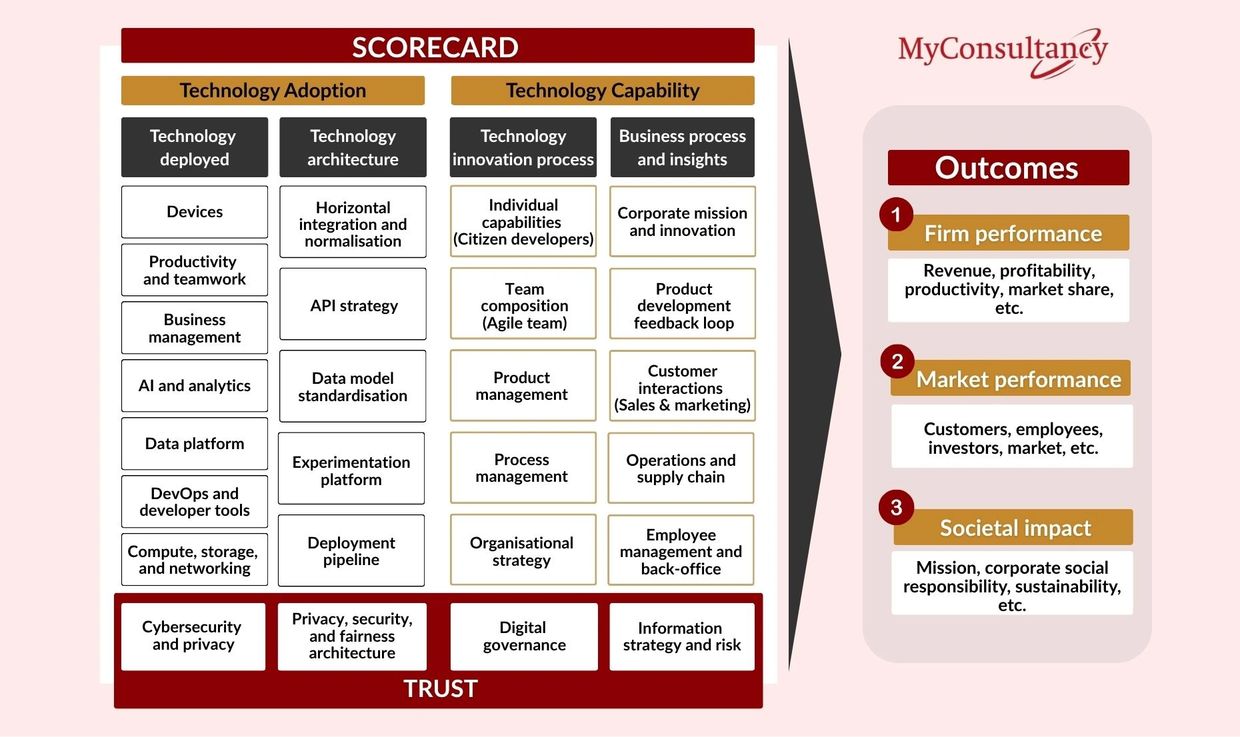
AI Transformation Framework
Why AI Transformation Fails and What It Actually Takes to Scale
Most organisations do not have an AI problem. They have a structural problem that AI exposes.
The pilots work. The technology performs. Yet when organisations attempt to scale, initiatives stall, accountability blurs, and the expected value fails to materialise.
The constraint is almost never the algorithm. It is the operating model surrounding it: how decisions get made, how investment flows, how teams are structured, and how governance keeps pace with capability.
Scaling AI in the enterprise requires two things working in parallel: leadership driving the transformation, and an operating model designed to sustain it.
This framework brings together both dimensions:
- Leading the AI Transformation: the leadership journey required to move from experimentation to enterprise adoption
- The AI Operating Model Playbook: the structural decisions required to scale AI sustainably

Leadership and Transformation
AI transformation does not begin with technology. It begins with the questions leaders are willing to ask.
- What strategic role should AI play, and what does that mean for how we compete?
- How do we prioritise across a portfolio of AI initiatives without killing the work that matters?
- How do we govern risk, ethics, and responsible adoption before scale amplifies consequences?
- How do we align business and technology teams around outcomes rather than activity?
- How do we translate experimentation into enterprise capability?
These are leadership questions. Without clear answers, AI investment becomes a cycle of promising pilots and disappointing results.
These themes are explored in Leading the AI Transformation.

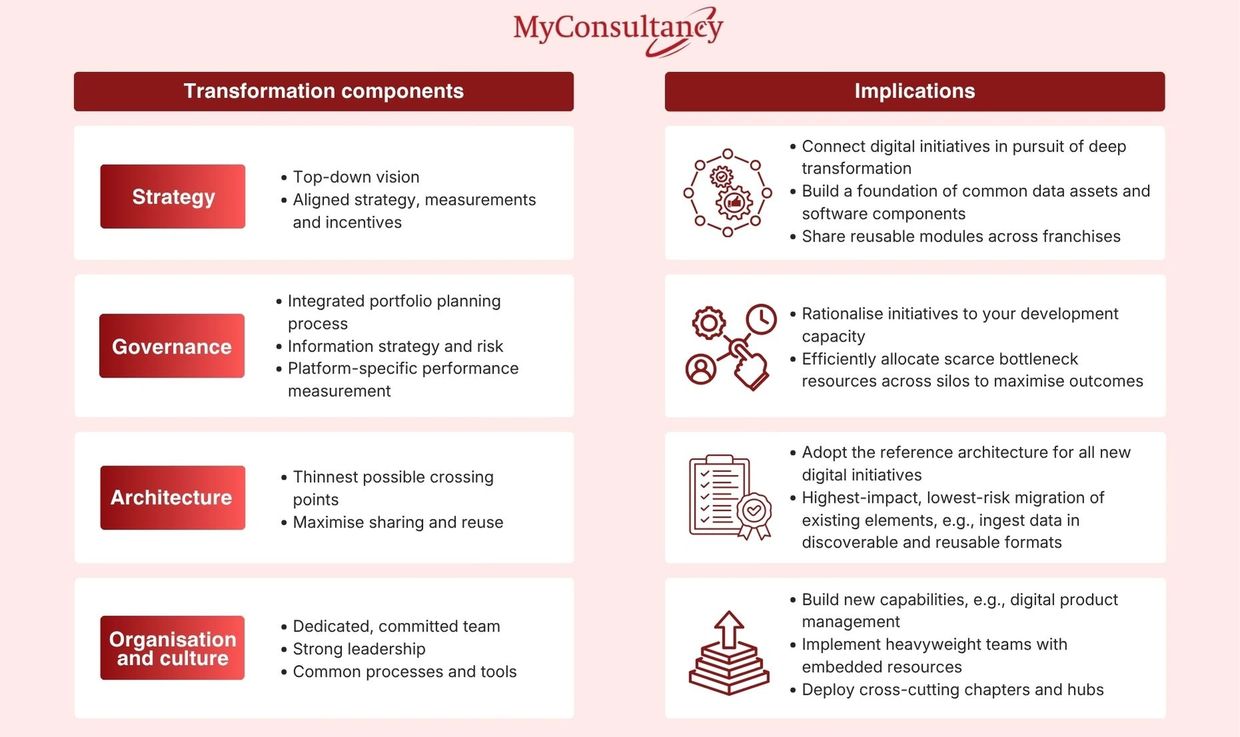
The Four Levers of AI Transformation: Leadership dimensions required to move from experimentation to enterprise scale.
AI Transformation Journey
AI transformation does not happen in a single step. It evolves as organisations move from isolated use cases to integrated, enterprise-wide capability.
Early efforts often focus on process improvement and experimentation. As capability matures, organisations begin to integrate data, scale use cases, and embed AI into core workflows.
Over time, this progression leads to the development of enterprise platforms that support sustained innovation and continuous improvement.
Understanding this journey helps leaders align expectations, sequence investment, and avoid premature scaling before the necessary foundations are in place.
This reflects how transformation unfolds in practice across use cases, data, and platforms.

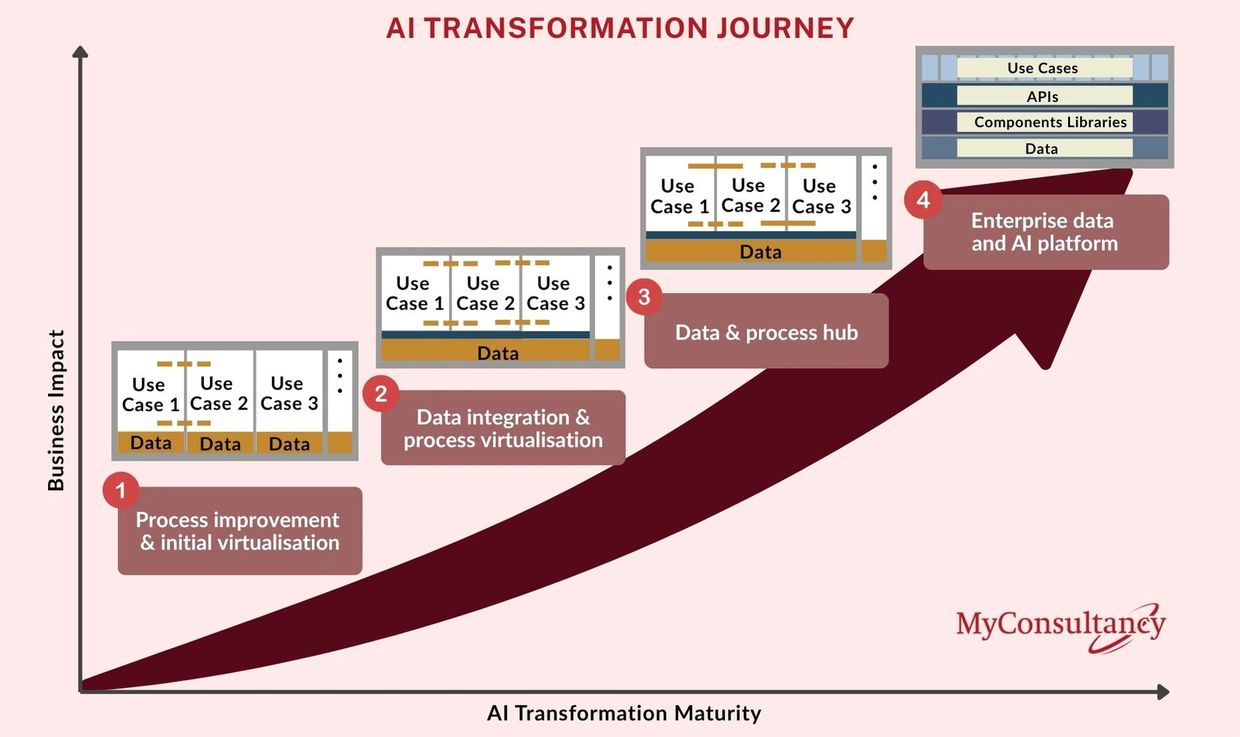
AI Transformation Journey: How organisations evolve from isolated use cases to enterprise-scale AI capability.
The AI Operating Model
Most organisations attempt to scale AI within operating models designed for a different era.
Leadership sets direction. The operating model determines whether AI scales or stalls.
Traditional operating models were designed for predictable processes and stable decision structures. AI introduces systems that learn, adapt, and influence decisions in ways that existing governance, funding, and accountability models were never built to manage.
Organisations that successfully scale AI address eight structural elements:
- Portfolio Discipline: Managing AI initiatives as a governed portfolio with clear prioritisation and the discipline to stop what is not working.
- Funding Logic: Moving from project-based funding to sustained capability investment.
- Decision Rights: Defining accountability when algorithms influence decisions.
- Team Structures: Enabling cross-functional teams to build and scale AI continuously.
- Process Integration: Embedding AI directly into core workflows.
- Risk Stewardship: Governing risk, ethics, and compliance without slowing progress.
- Value Measurement: Linking AI initiatives to measurable business outcomes.
- Scaling Commitment: Ensuring leadership alignment and long-term investment to scale.
These structural choices determine whether AI transformation delivers sustained enterprise value or remains experimental.

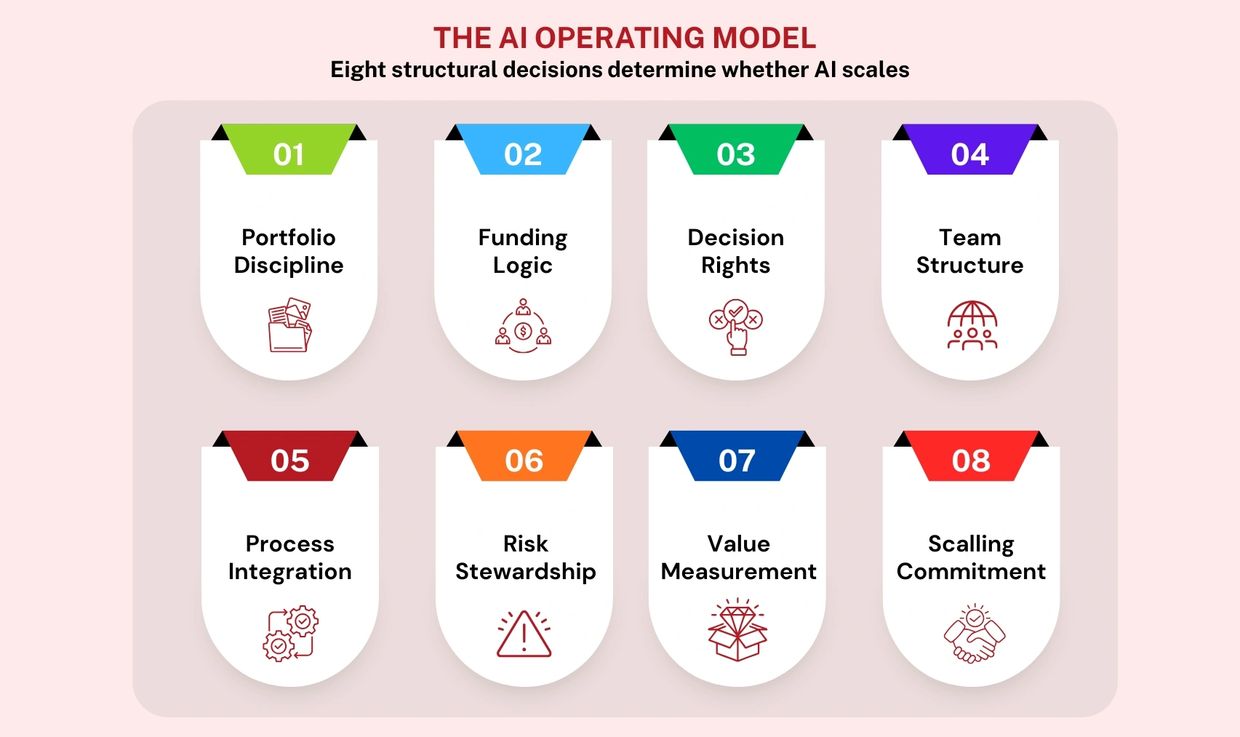
The AI Operating Model: Eight structural elements that determine whether AI scales across the enterprise.
The AI Maturity Model
The AI maturity model provides a structured lens to assess where an organisation stands and what capabilities must be built next.
Organisations move through distinct stages as they build capability, governance, and integration into core operations. Understanding this progression is critical to prioritisation, investment, and expectation setting.

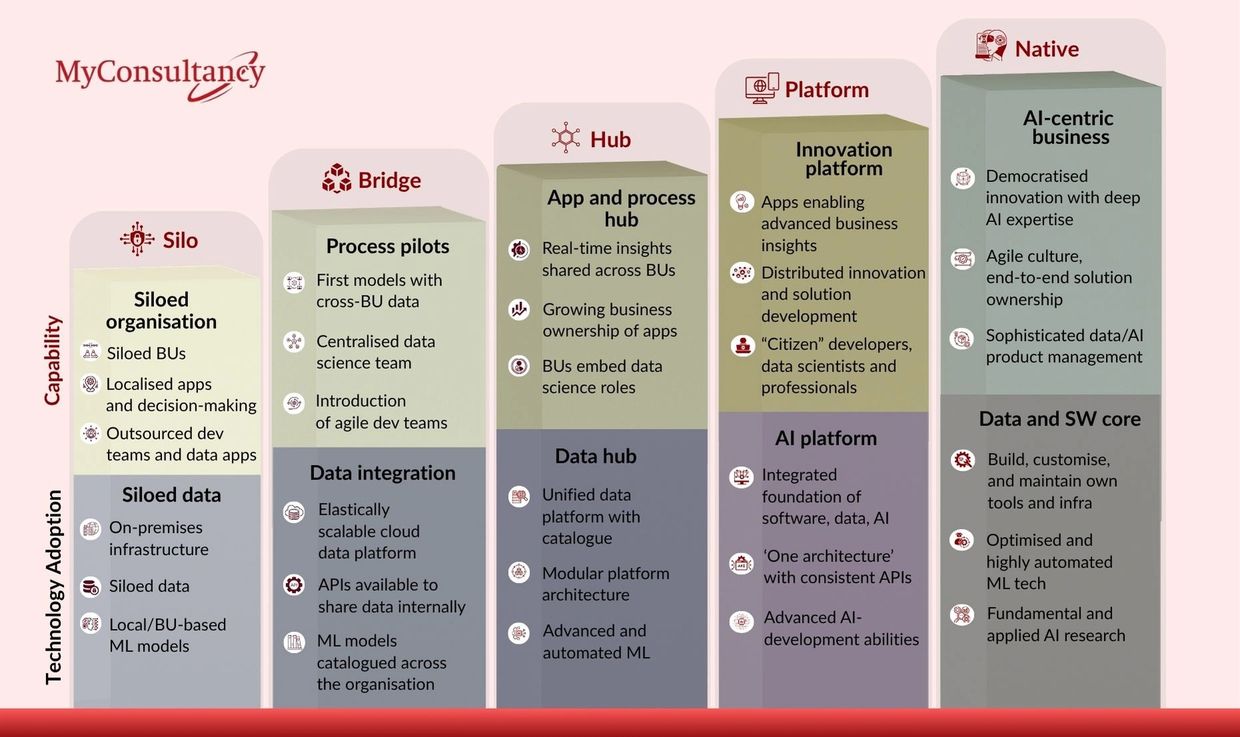
AI Maturity Model: The stages organisations move through to scale AI across the enterprise.
From Framework to Execution
Frameworks create clarity. Execution creates outcomes.
MyConsultancy works with organisations across the full transformation journey, from shaping strategy and designing operating models, to leading complex programs and embedding governance that sustains results.
Advice
Define strategic direction, assess AI maturity, and design governance and operating model foundations.
Deliver
Lead enterprise transformation programs with disciplined execution, alignment, and accountability.
Improve
Strengthen performance governance, embed continuous improvement, and sustain capability uplift.